Meta Description
Compare the key pros and cons of PV Plush, Mink Plush, and Velvet Fabric in this detailed textile guide. Learn texture, durability, maintenance, and usability differences to select the best plush and velvet material for manufacturing and sewing projects.
Introduction
PV Plush Fabric,
Mink Plush Fabric, and Velvet Fabric are three of the most widely used plush and velvet textiles in modern home textile production, apparel manufacturing, plush toy crafting, and interior decoration. All three fabrics deliver soft tactile quality, attractive visual texture, and versatile usability, which is why PV Plush Fabric, Mink Plush Fabric, and Velvet Fabric are frequently compared and selected by manufacturers, sewers, and wholesale buyers. However, PV Plush Fabric, Mink Plush Fabric, and Velvet Fabric feature distinct structural designs, fiber compositions, and technical characteristics, leading to huge differences in durability, softness, maintenance difficulty, warmth retention, and cost performance. Understanding the detailed pros and cons of PV Plush Fabric, Mink Plush Fabric, and Velvet Fabric is essential for making accurate material selections, avoiding production defects, optimizing finished product quality, and improving long-term product usability.
Many textile practitioners and creative enthusiasts often confuse PV Plush Fabric, Mink Plush Fabric, and Velvet Fabric due to their similar soft surface appearance. Blindly replacing one fabric with another without recognizing their unique strengths and weaknesses will result in mismatched product performance, increased maintenance issues, or reduced market competitiveness. This professional textile guide thoroughly analyzes the core pros and cons of PV Plush Fabric, Mink Plush Fabric, and Velvet Fabric from multiple practical dimensions, including texture performance, durability, cleaning maintenance, warmth, aesthetic presentation, production adaptability, and cost efficiency. This comprehensive comparison helps users clearly distinguish PV Plush Fabric, Mink Plush Fabric, and Velvet Fabric and apply each fabric in the most suitable manufacturing and sewing scenarios.
Core Characteristics Overview Of PV Plush Fabric, Mink Plush Fabric And Velvet Fabric
Before analyzing the pros and cons of PV Plush Fabric, Mink Plush Fabric, and Velvet Fabric, it is necessary to clarify their basic structural traits that determine overall performance. PV Plush Fabric is a compact short-pile synthetic textile with uniform flat fibers, focusing on practicality and stability for mass daily products. Mink Plush Fabric is a high-grade layered plush fabric with ultra-fine multi-dimensional piles, designed to simulate natural fur texture and deliver superior fluffy comfort. Velvet Fabric adopts a unique cut-pile weaving structure with smooth, even surface luster, prioritizing elegant visual effects and delicate tactile experience. These fundamental structural differences lay the foundation for the unique pros and cons of PV Plush Fabric, Mink Plush Fabric, and Velvet Fabric in actual use.
Pros And Cons Of PV Plush Fabric
PV Plush Fabric is recognized as the most cost-effective and stable plush textile for mass production, widely applied in daily plush toys, household pillows, washable blankets, and conventional home textiles. The balanced performance of PV Plush Fabric makes it a mainstream choice for civilian textile manufacturing, while its structural limitations also bring obvious usage drawbacks.
Key Pros of PV Plush Fabric
First, PV Plush Fabric delivers outstanding durability and structural stability. The tight short-pile weaving structure of PV Plush Fabric ensures strong friction resistance, compression resistance, and shape retention. PV Plush Fabric rarely deforms, wrinkles, or collapses after long-term extrusion, repeated washing, and daily friction, maintaining a neat surface state for years. This advantage makes PV Plush Fabric highly suitable for high-frequency use products that require long service life.
Second, PV Plush Fabric features extremely low maintenance difficulty and excellent washability. PV Plush Fabric supports machine washing and conventional daily cleaning without hair shedding, fading, or pile disorder. The compact pile structure of PV Plush Fabric is not easy to hide dust, dirt, and pet hair, greatly reducing daily cleaning workload. The fast-drying performance of PV Plush Fabric also improves production efficiency and user convenience for finished products.
Third, PV Plush Fabric provides superior cost performance and stable batch consistency. The mature production technology of PV Plush Fabric lowers manufacturing costs, making PV Plush Fabric highly affordable for large-batch wholesale and mass production. Industrial standardized processing ensures uniform texture, color, and softness of PV Plush Fabric across different batches, effectively avoiding quality deviation in bulk orders.
Fourth, PV Plush Fabric has moderate skin friendliness and universal safety. Qualified PV Plush Fabric is hypoallergenic, odorless, and free of harmful chemical residues, complying with global civilian textile safety standards. PV Plush Fabric is safe for children’s products and close-fitting daily textiles, with stable color fastness that prevents staining and skin irritation.
Key Cons of PV Plush Fabric
First, PV Plush Fabric has limited fluffy texture and low decorative grade. Compared with layered Mink Plush Fabric and lustrous Velvet Fabric, PV Plush Fabric presents a flat and plain visual effect without three-dimensional layering and luxurious luster. The single texture of PV Plush Fabric restricts its application in high-end decorative and customized boutique products.
Second, PV Plush Fabric has average warmth retention. The short and compact pile structure of PV Plush Fabric cannot lock air efficiently, resulting in weaker thermal insulation performance than Mink Plush Fabric. PV Plush Fabric is not suitable for ultra-thick winter warm products that require strong cold resistance.
Third, PV Plush Fabric has relatively single tactile experience. Although PV Plush Fabric is soft enough for daily use, it lacks the silky delicate touch and cloud-like fluffiness of high-grade plush fabrics, limiting its market competitiveness in mid-to-high-end product lines.
Pros And Cons Of Mink Plush Fabric
Mink Plush Fabric is a premium simulated fur textile famous for ultra-soft texture and layered fluffiness, mainly used in high-end blankets, luxury home textiles, gift plush products, and warm bedding. Mink Plush Fabric has unparalleled advantages in comfort and ornamental value, while its delicate structure brings obvious usage and maintenance limitations.
Key Pros of Mink Plush Fabric
First, Mink Plush Fabric provides top-tier softness and fluffy three-dimensional texture. Made of ultra-fine layered fibers, Mink Plush Fabric delivers a silky, cloud-like tactile experience that is far more delicate and flexible than PV Plush Fabric and ordinary Velvet Fabric. The multi-layer pile structure of Mink Plush Fabric creates rich visual layering and natural simulated fur effects, greatly improving product grade and ornamental value.
Second, Mink Plush Fabric boasts excellent warmth retention performance. The dense staggered piles of Mink Plush Fabric form a stable air-locking layer, effectively isolating cold air and retaining heat. Mink Plush Fabric is significantly warmer than PV Plush Fabric and standard Velvet Fabric, making it the best choice for thick winter warm textiles and cold-resistant products.
Third, Mink Plush Fabric has strong aesthetic and personalized value. Mink Plush Fabric supports diverse dyeing, gradient, and printing designs with soft and natural luster. The dynamic light and shadow changes of Mink Plush Fabric enhance product fashion and high-end texture, suitable for customized gifts, luxury decoration, and boutique textile products.
Fourth, Mink Plush Fabric features excellent skin friendliness and comfort. The ultra-fine fiber structure of Mink Plush Fabric is smooth and non-irritating, perfectly fitting human skin. Mink Plush Fabric avoids the stiff and rough feeling of ordinary synthetic fabrics, providing supreme comfort for long-term close contact.
Key Cons of Mink Plush Fabric
First, Mink Plush Fabric has poor wear resistance and compression stability. The loose layered pile structure of Mink Plush Fabric is prone to flattening, tilting, and matting under long-term extrusion and frequent friction. Mink Plush Fabric cannot withstand high-frequency daily use like PV Plush Fabric, leading to easy texture attenuation over time.
Second, Mink Plush Fabric requires high-standard daily maintenance. Mink Plush Fabric is not suitable for frequent machine washing, as violent stirring and extrusion will destroy the layered pile structure. Users need regular combing and low-temperature steam care to restore fluffiness, increasing long-term maintenance costs and difficulty.
Third, Mink Plush Fabric has higher production and procurement costs. The complex layered fluffing process and high-quality ultra-fine fiber materials raise the manufacturing cost of Mink Plush Fabric. The higher price of Mink Plush Fabric limits its application in low-budget mass production scenarios.
Fourth, Mink Plush Fabric is prone to dust accumulation. The multi-layer gap structure of Mink Plush Fabric easily absorbs floating dust, pet hair, and fine debris, requiring frequent cleaning to maintain a clean and neat surface.
Pros And Cons Of Velvet Fabric
Velvet Fabric is a classic high-grade cut-pile textile balanced with elegant luster, smooth touch, and versatile decoration performance, widely used in fashion apparel, high-end upholstery, decorative crafts, and boutique home textiles. Velvet Fabric’s unique aesthetic advantages are irreplaceable, while its delicate structure also brings obvious usage restrictions.
Key Pros of Velvet Fabric
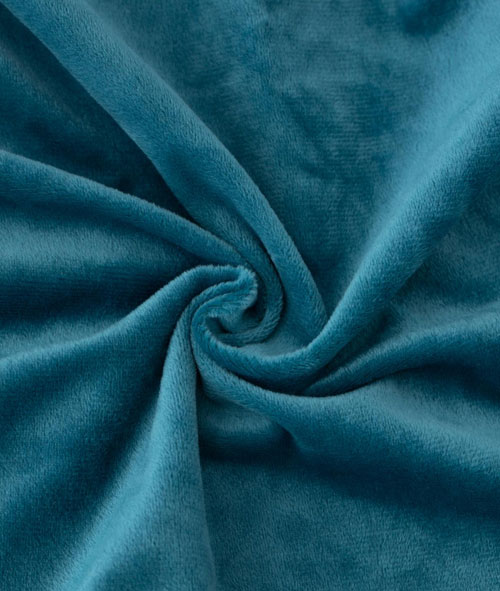
First, Velvet Fabric has unique luxurious luster and smooth surface texture. The neat cut-pile structure of Velvet Fabric presents uniform and gentle light reflection, with elegant low-gloss texture that is different from the plain PV Plush Fabric and fluffy Mink Plush Fabric. The smooth and flat surface of Velvet Fabric delivers a sophisticated and high-end visual effect, greatly improving product decoration grade.
Second, Velvet Fabric has excellent drapability and sewing adaptability.
Velvet Fabric Features flexible fiber structure and moderate softness, with outstanding draping performance suitable for apparel sewing, curved decoration, and three-dimensional craft production. Velvet Fabric does not appear bulky or stiff after cutting and stitching, adapting to diverse creative design needs.
Third, Velvet Fabric has strong color saturation and stable coloring performance. Velvet Fabric absorbs dye evenly and deeply, presenting full and pure color tones with excellent light fastness. Velvet Fabric is not easy to fade or discolor after long-term use, maintaining a fresh and elegant appearance for a long time.
Fourth, Velvet Fabric balances decoration and moderate practicality. High-quality synthetic Velvet Fabric improves wear resistance and shaping performance on the basis of retaining luxurious texture, suitable for both high-end decoration and daily lightweight use, with wider scenario adaptability than Mink Plush Fabric.
Key Cons of Velvet Fabric
First, Velvet Fabric is highly prone to pile marking and pressure indentation. The directional cut-pile structure of Velvet Fabric easily forms obvious dark marks and flattening after slight extrusion and friction. Pile disorder and shading problems of Velvet Fabric are difficult to eliminate completely, affecting surface uniformity.
Second, Velvet Fabric has strict maintenance requirements. Velvet Fabric is sensitive to high temperature, strong friction, and improper washing. Machine washing and high-temperature drying will cause pile hardening, matting, and luster loss. Daily cleaning of Velvet Fabric requires gentle wiping and professional finishing, increasing maintenance difficulty.
Third, Velvet Fabric has poor dust resistance. The dense upright piles of Velvet Fabric easily capture fine dust and lint, and surface stains are more obvious than plush fabrics. Regular professional care is required to maintain the smooth and clean texture of Velvet Fabric.
Fourth, high-grade Velvet Fabric has high cost and low cost performance. Premium Velvet Fabric with pure natural fibers or high-precision weaving technology has expensive production costs, limiting its large-scale application in low-end mass-produced products.
Direct Comparison: PV Plush Fabric vs Mink Plush Fabric vs Velvet Fabric
In practical textile manufacturing and sewing selection, the core differences between PV Plush Fabric, Mink Plush Fabric, and Velvet Fabric are highly clear. PV Plush Fabric is the most practical and cost-effective option, prioritizing durability, washability, and stable quality for daily mass products. Mink Plush Fabric focuses on comfort and warmth, targeting high-end warm and decorative products with supreme fluffy texture. Velvet Fabric emphasizes aesthetic presentation and flexible ductility, dominating fashion decoration and high-end customized products.
For manufacturers pursuing high yield, low loss, and stable batch quality, PV Plush Fabric is the most reliable choice. For brands focusing on product comfort, warmth, and high-end tactile experience, Mink Plush Fabric has absolute advantages. For designers and producers focusing on elegant appearance, diverse styling, and decorative layering, Velvet Fabric is irreplaceable.
Best Application Scenarios Based On Fabric Pros And Cons
Making full use of the pros and cons of PV Plush Fabric, Mink Plush Fabric, and Velvet Fabric can maximize product performance and market value. PV Plush Fabric is most suitable for plush toys, daily pillows, washable blankets, pet supplies, and mass home textiles that require durability and easy maintenance. Mink Plush Fabric is ideal for winter thick blankets, high-end bedding, gift textiles, and luxury indoor decoration that need superior warmth and fluffy comfort. Velvet Fabric is perfect for velvet apparel, sofa upholstery, decorative cushions, art crafts, and high-end customized ornaments that require elegant luster and flexible styling.
Conclusion
PV Plush Fabric, Mink Plush Fabric, and Velvet Fabric each have unique and irreplaceable pros and cons in texture, durability, maintenance, warmth, and aesthetic performance. PV Plush Fabric stands out for its high durability, low maintenance, and cost efficiency, meeting the stable quality needs of daily mass textile production. Mink Plush Fabric excels in ultra-soft fluffiness and superior warmth, supporting high-end comfortable and warm product design despite higher maintenance requirements. Velvet Fabric gains competitive advantages with luxurious luster and excellent drapability, suitable for high-grade decorative and apparel products with delicate texture requirements.
Mastering the detailed pros and cons of PV Plush Fabric, Mink Plush Fabric, and Velvet Fabric allows textile manufacturers, sewers, and wholesale buyers to achieve precise material matching, avoid usage defects caused by fabric mismatch, and greatly improve finished product quality, service life, and market competitiveness. Reasonable selection of PV Plush Fabric, Mink Plush Fabric, and Velvet Fabric according to product positioning is the key to efficient and high-quality textile production and creative design.

 Pусский
 日本語
日本語 한국어
한국어 العربية



 WhatsApp
 Phone
Phone
Comment
(0)